
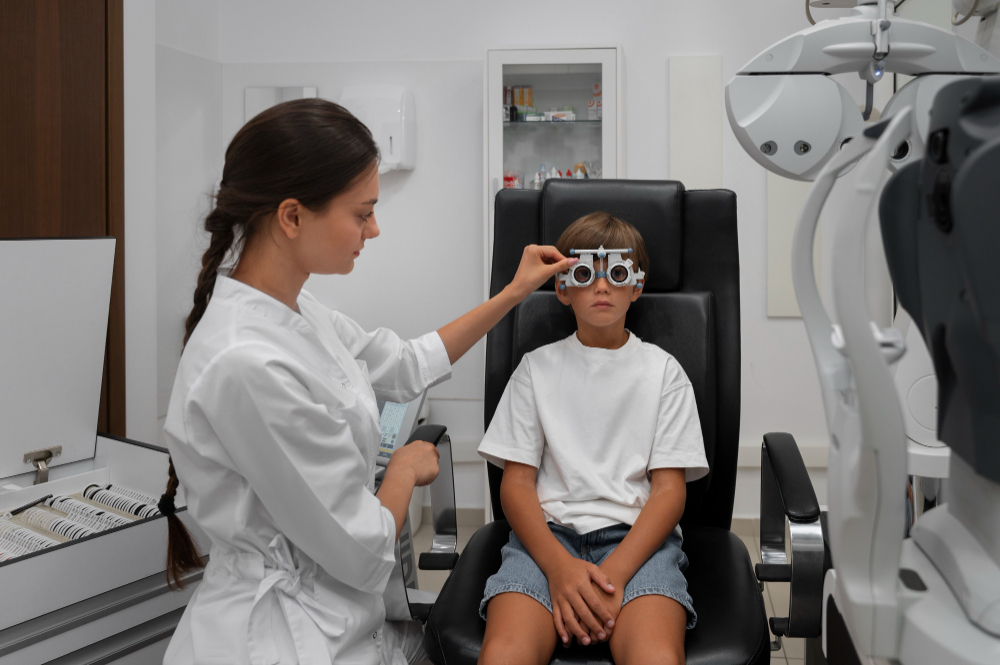
What Is Early Vision Screening?
Early vision screening is a simple check of your eyes. It helps find problems before they get worse. Usually, doctors or eye care specialists do these tests. For children, early vision screening can spot issues that may affect learning. For adults, it helps prevent vision loss. In many cases, early detection leads to better treatment. Because of this, regular eye exams are important for everyone.
Why Is Early Vision Screening Important?
Early vision screening is important for many reasons. First, it can catch eye problems before they cause lasting harm. For example, some eye diseases do not show symptoms at first. However, with early screening, doctors can find these problems sooner. As a result, treatment can start right away. This helps protect your eyesight for the future. In addition, early screening is key for children. It supports healthy vision and learning in school.
Common Eye Problems Detected Early
Many eye problems can be found early with screening. Some of the most common include:
Because these problems can develop slowly, early vision screening is vital.
How Early Vision Screening Works
Early vision screening is quick and painless. Usually, an eye care specialist will use simple tools to check your vision. For children, the test may include looking at pictures or shapes. For adults, it often involves reading letters on a chart. Sometimes, the doctor will shine a light in your eyes or use special drops. These steps help find any problems early. After the test, you will get advice on next steps if needed.
Who Should Get Screened and When?
Everyone should have regular vision screenings. However, the timing may differ by age:
In some areas, local clinics or schools offer free or low-cost screenings. Because access can vary, check with your local health department for options.
Benefits of Early Detection
There are many benefits to early vision screening. For example, it can:
Because early detection leads to better outcomes, regular screening is a smart choice.
Tips for Maintaining Eye Health
Besides regular screenings, you can take steps to protect your eyes. Here are some simple tips:
Because small changes can make a big difference, start these habits today.
Conclusion: Take Charge of Your Eye Health
Early vision screening is a simple way to protect your eyesight. Whether you are a parent or an adult, regular eye exams matter. Because many eye problems can be treated if found early, do not wait for symptoms. Schedule a vision screening today. For the best advice, consult an eye care specialist at Ishaa Netralaya Eye Care Hospital who can guide you based on your needs.